
Skiing & winter / Zhalong in the snow
Private winter journey · Heilongjiang
Zhalong in the Snow: 4 Days with the Cranes
Zhalong is the largest reed wetland in the world: 2,100 square kilometres of it, thirty kilometres south-east of Qiqihar, holding the biggest wild breeding population of red-crowned cranes anywhere — close to 300 birds — and six of the world’s fifteen crane species. In winter the reeds carry snow, the lakes freeze, and the reserve’s trained cranes fly twice a day over the white ground. This is a short, honest winter week about that flight, and about the difference between the birds you see and the birds that left in October.
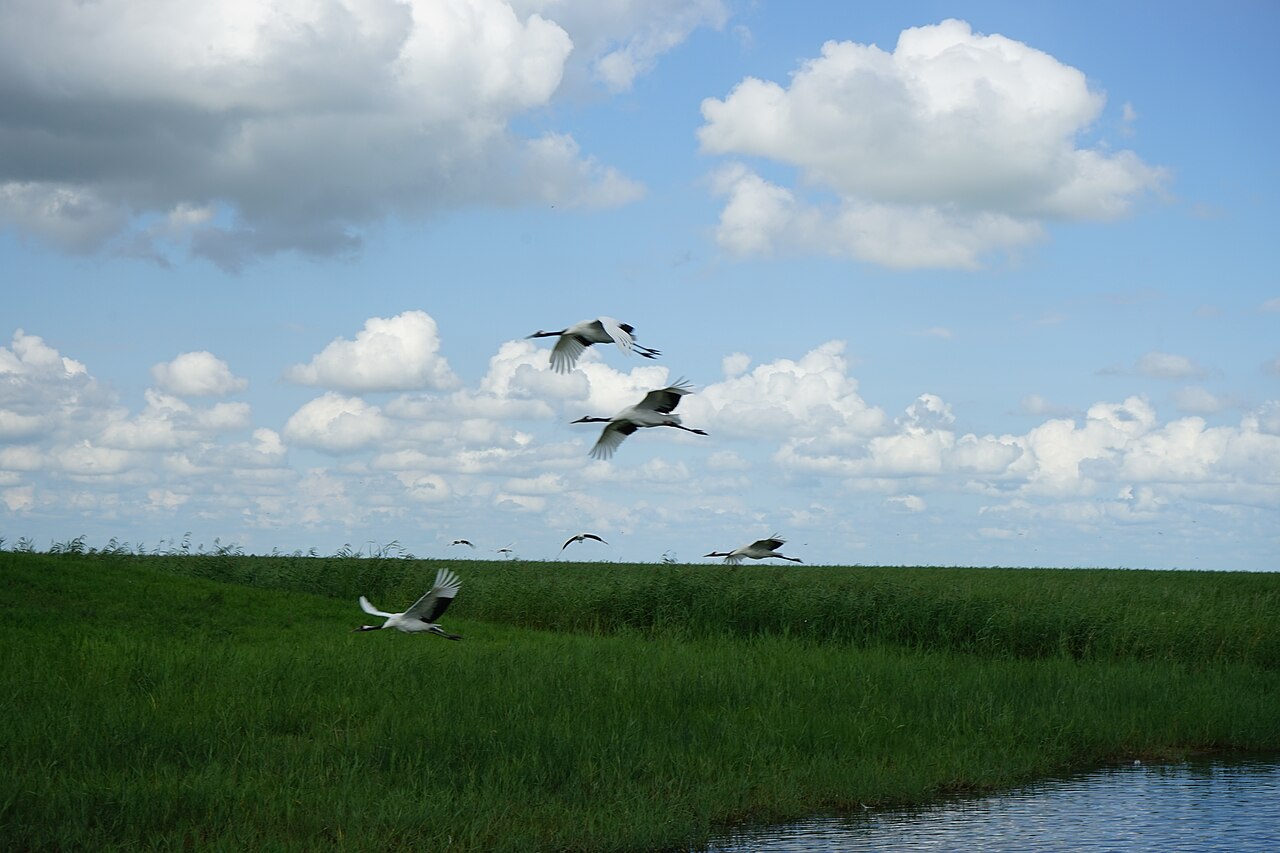
Ask about this itineraryThe release flight at Zhalong over the reed beds — in winter the same birds fly at 10:30 and 15:00 above snow
Reed marsh on the Nenjiang plain, listed as a wetland of international importance in 1992 and the largest of its kind in the world
Six of the world’s fifteen crane species use Zhalong; red-crowned, white-naped and demoiselle breed here
The largest wild breeding population of red-crowned cranes, in a global population of roughly 2,000 to 2,400 birds
The reserve’s winter release times, when the trained colony is flown over the enclosure and the snow
Why this week
The birds in the snow are not the wild ones.
This is the one page on the site where the honest version is more interesting than the brochure version. Wild red-crowned cranes leave Zhalong in autumn and winter on the Jiangsu coast, where the count in the last survey was 542 birds. What you watch in the snow at Zhalong is the reserve’s own colony — birds bred here, some of them hand-raised, flown twice a day in a managed release. It is a conservation programme, not a migration, and it is genuinely worth a winter week: you are within metres of a bird that stands a metre and a half tall, in falling snow, at a density no wild encounter allows.
Zhalong was established as a reserve in 1979, became a national reserve in 1987 and joined the Ramsar list in 1992. The breeding programme is the oldest and largest of its kind in China, with roughly a thousand cranes bred here over four decades, and the wild population that returns each spring is one of the reserve’s two success stories. The other is the water: a long-term recharge scheme has put water back into a marsh that was drying out. A winter visit sees both, because the reserve is still working while the tourists are gone — and the cold, which is the reason nobody comes in January, is also the reason the reed beds photograph the way they do.
Route Briefing
Into Qiqihar, three nights in the city, two reserve days: the 10:30 flight and the 15:00 flight on separate days, the boardwalk and hides between them, and the breeding centre on the second morning.
- Day 1Arrive Qiqiharcity base
- Day 2Zhalongtwo flights
- Day 3Zhalongcentre & hides
- Day 4Departrail or fly
Day by day
Four days, four flights.
The reserve flies its cranes twice a day in winter, so two days gives you four flights and two chances at clear light — which is the whole arithmetic of a winter crane trip.
-
Day 01
Arrive in the crane city
Qiqihar
Fly into Qiqihar Sanjiazi or take the high-speed line from Harbin, about an hour and a half. Qiqihar calls itself the crane city and means it: the bird is on the station frontage and half the shop signs. The afternoon is for the city and an early night, because the reserve gate is thirty kilometres out and the first flight is at 10:30 — later than a summer dawn, which is one small mercy of a winter visit.
-
Day 02
Two flights and the boardwalk
Zhalong reserve
Into the reserve before ten for the first release of the day: the cranes come over the enclosure in a group, wings wide, against snow-covered reeds, and the flight lasts minutes rather than an hour. Then the boardwalk and the hides along the water, where the birds that are not flying stand and feed. Back for the 15:00 flight, which on a clear day has the better light. Winter opening hours end at 17:00, so the day finishes early and dinner is early too.
-
Day 03
The breeding centre and a second morning
Zhalong reserve
The reserve’s crane breeding and research centre is where the colony comes from: the oldest and largest programme of its kind in China, with the birds that later form the release group. A second morning at the flights, in different weather, is the point of staying two days — snow, sun and flat grey light give three completely different pictures of the same bird. Anyone who wants a third session can take the afternoon flight before the drive back.
-
Day 04
Out, or on to Harbin
Zhalong → depart
A slow morning and the transfer out. Harbin and the ice city are an hour and a half east by rail and make the obvious continuation in January and February; the Songhua rime mornings at Jilin are four hours further on. In summer the same wetland is a different trip entirely — wild breeding cranes on territory, and the reserve at full water.
What's included
What is included, and what is not.
The reserve is a working conservation site with opening hours, set flight times and rules about where you can stand. We build the days around those, not around a photographer’s wish list.
Included
Arranged and paid in your quote.
-
English-speaking trip leader throughout and a local guide who knows the reserve staff
-
Private vehicle for all transfers, including both reserve days
-
Three nights in a Qiqihar hotel
-
All breakfasts and selected dinners
-
Reserve entry, shuttle and the flights on both days
-
Access to the boardwalk, hides and the breeding centre where it is open to visitors
Not included
Either yours to arrange, or a question we will gladly answer.
-
Flights or high-speed rail to Qiqihar
-
Long lenses and cold-weather camera kit — rented locally where needed, quoted separately
-
Lunches, remaining dinners and travel insurance
-
Any behind-the-scenes access the reserve grants on the day, which is at its discretion and never sold in advance
Season reality, stated plainly: in winter the wild red-crowned cranes are on the Jiangsu coast, not at Zhalong. The birds you watch in the snow are the reserve’s bred and trained colony, flown at 10:30 and 15:00 from November to mid-April. Flight times and access can be changed or cancelled by the reserve without notice, and heavy snow occasionally closes the road in. This is a four-day trip, not a photographic expedition — if you want hides at dawn and dusk for a week, tell us and we will build that instead.
Enquiry
Ask about the crane week.
Tell us your dates, whether you are photographing, and whether you would rather combine this with Harbin. We will confirm the reserve’s flight schedule for your window and come back with a written outline and a price.
- Response time
- One business day
- Private journey
- Your own dates
- Pairs with
- Harbin, or the Jilin rime
Enquiry sent
Thank you — your enquiry is with us.
We reply within one business day. A copy of what you sent has gone to your inbox.
Need to add something? Write to inquiry@chinadventure.com.
Back to the itineraryRead next