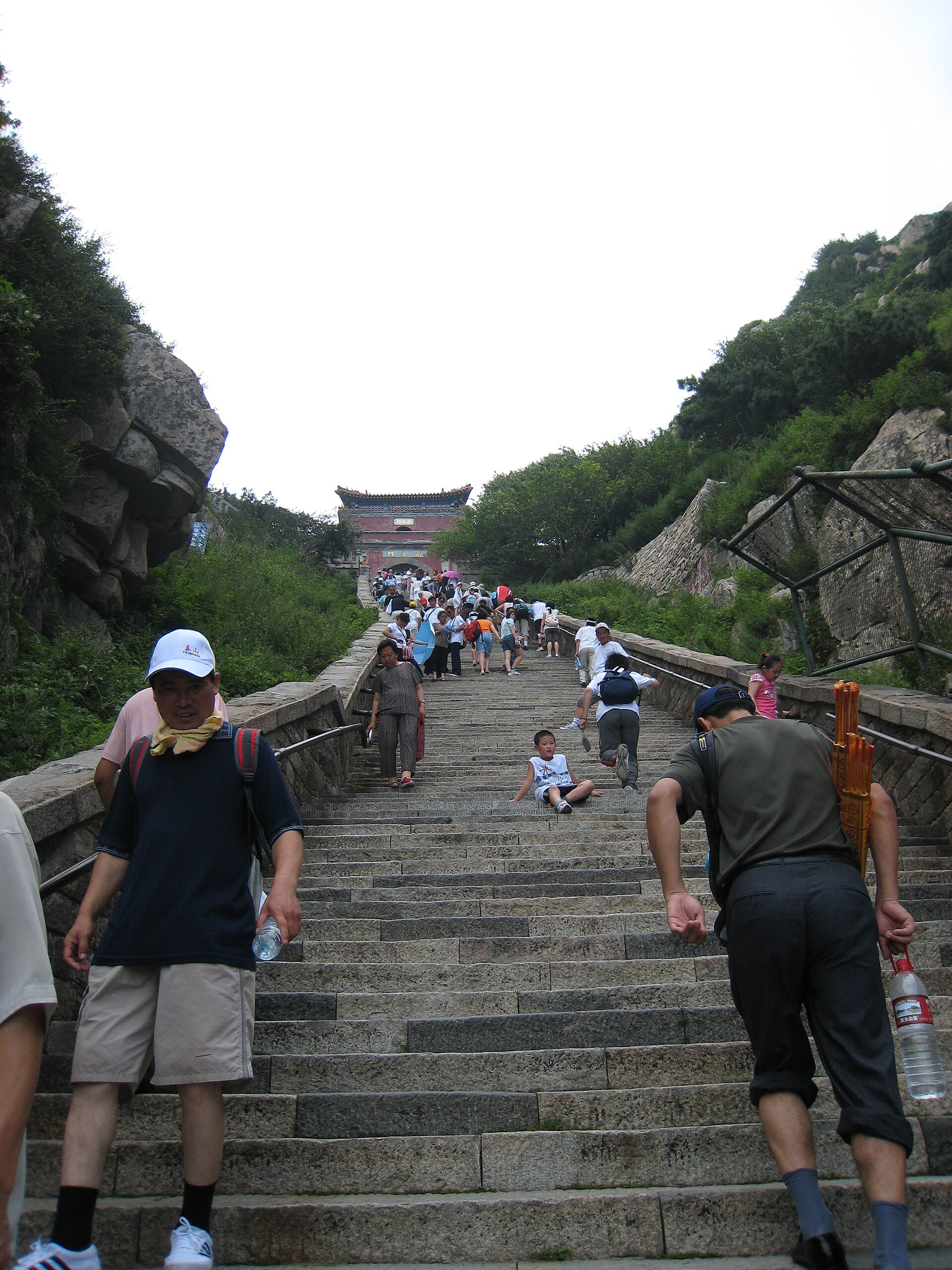
The oldest walking route in China.
Mount Tai is where Chinese emperors came to report to heaven, and the imperial pilgrimage route — a stone staircase from Tai'an city to the 1,545-metre summit, gated by archways the whole way — is the most historic walk in the country. Confucius climbed it, seventy-two emperors sacrificed on it, and today the climb happens mostly at night so that the summit arrives at sunrise.
The night climb is a cultural experience that happens to be a hike: the stairway is lit and busy, tea houses and supply stalls run the whole route, and the summit's hotels and sunrise terraces are organised around the dawn crowds. It is also a genuine physical test — six thousand six hundred steps, five hours up — and it rewards preparation.
Choose the walk that fits.
The classic night ascent
Overnight · demanding, ~7,000 stepsStart from Red Gate at ten or eleven, climb through the lit stairway with rest stops at the Middle Heaven Gate, reach the summit hotels by three or four, and take the sunrise at the Jade Emperor Peak terraces.
Cable-car assisted sunrise
Evening · easy-moderateClimb the lower half, ride the cable car from Middle Heaven Gate's vicinity, and walk the summit ridge for dawn — the right choice for travellers who want the sunrise without six hours of stairs.
The daytime descent via the back route
Half day · moderateCome down the quieter northern path through the forest and the Song-era temples, exiting toward the later archways — the descent as its own walk rather than a repeat.
Know before you go.
Book the summit bed
Sunrise hotels on the summit sell out; the supported trip reserves a room or a heated dorm so the pre-dawn wait is indoors, not on a bench.
The cold is real
Summit pre-dawn runs ten to fifteen degrees below the city, in wind. Layers rented or carried at the base are the difference between a sunrise and an ordeal.
Steps versus knees
Seven thousand stone steps down punish knees more than up: trekking poles or the cable-car descent are legitimate choices.
Crowd arithmetic
Weekends and holidays bring pilgrimage-scale crowds; a weekday night climb is a different, quieter mountain.
A possible journey.
A two-day Mount Tai module — climb at night, sleep at the summit, descend slowly.
- Arrive Tai'an by high-speed rail; rest, an early dinner, and a ten o'clock start at the Red Gate.
- The night climb through the lit stairway to the summit; bed at the reserved hotel before or after the sunrise depending on pace.
- Sunrise at the Jade Emperor terraces; the summit temples in morning light, then the cable car or the back-route descent and the rail onward to Qufu or Jinan.
Prepare for the actual route.
Bring proper walking shoes, a headtorch (the stairway is lit but shadows pool), warm layers for the summit and trekking poles for the descent. Water and snacks are sold on the route all night.
For a quote, tell us your dates and whether the full stairway or the cable-car assisted version fits your group. Proposals itemise the summit hotel, entries and transfers.
Your questions, answered.
How hard is the night climb?
Demanding but honest: five hours of stairs at a steady pace. It suits most reasonably fit travellers; the cable-car version suits the rest.
Is sunrise guaranteed?
No — mist and cloud are common. The summit hotels' terraces exist because waiting is part of the ritual; mornings after clear evenings have the best odds.
Is it crowded?
At weekends, yes, at pilgrimage scale. Weekday climbs are far quieter; we time the night accordingly.
References & photography.
Reference material supports destination context; check local opening arrangements before travel. The route choices and itinerary above are our planning suggestions.