
Dinner in a Chinese city can be blurred into one long national menu; breakfast cannot. The morning meal is where regional identity is sharpest, queues are longest, and prices are lowest. Eat breakfast where the locals queue, and you will learn more about a city in forty minutes than a day of sights will teach you.
The northern morning
Beijing opens on soy milk — sweet or, for the committed, the sour fermented kind — with fried dough sticks for dipping, wheaten pancakes and filled pastries from stalls that have held the same corner for decades. Tianjin’s jianbing, the crisp crêpe folded around egg and cruller, has conquered the whole country from its home cart. Further west, the wheat kitchen takes over: Lanzhou’s beef-noodle breakfast queue is a civic institution, and Xi’an starts on bread and porridge before the Quarter even wakes.
The southern morning
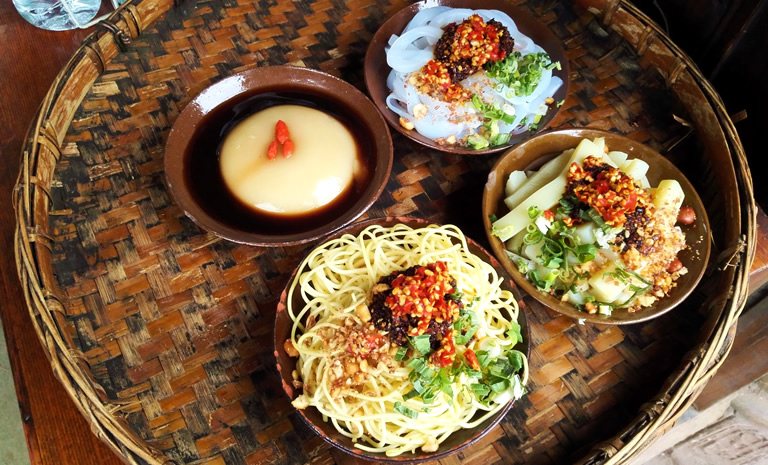
South of the rice line, breakfast is rice wearing many costumes. Guangzhou’s steamed rice rolls arrive silk-smooth under sweet soy; the serious version of the morning is yum cha itself, the teahouse ritual that turns breakfast into an institution. Wuhan counters with hot-dry sesame noodles eaten standing up; Shanghai folds its morning into sticky rice packages and soup dumplings; Chongqing’s small noodles test the day’s nerve before 8am.
The traveller’s rule
Follow two rules and every breakfast works: queue where locals queue, and point at what the person ahead of you is having. Our itineraries build mornings exactly this way — the Beijing hutong table opens on a hutong breakfast queue, the Canton dim sum journey on a teahouse — and the noodle map explains the bowls you will meet along the way.
Where this leads
The Beijing hutong table
The Canton dim sum journey
The noodle map