
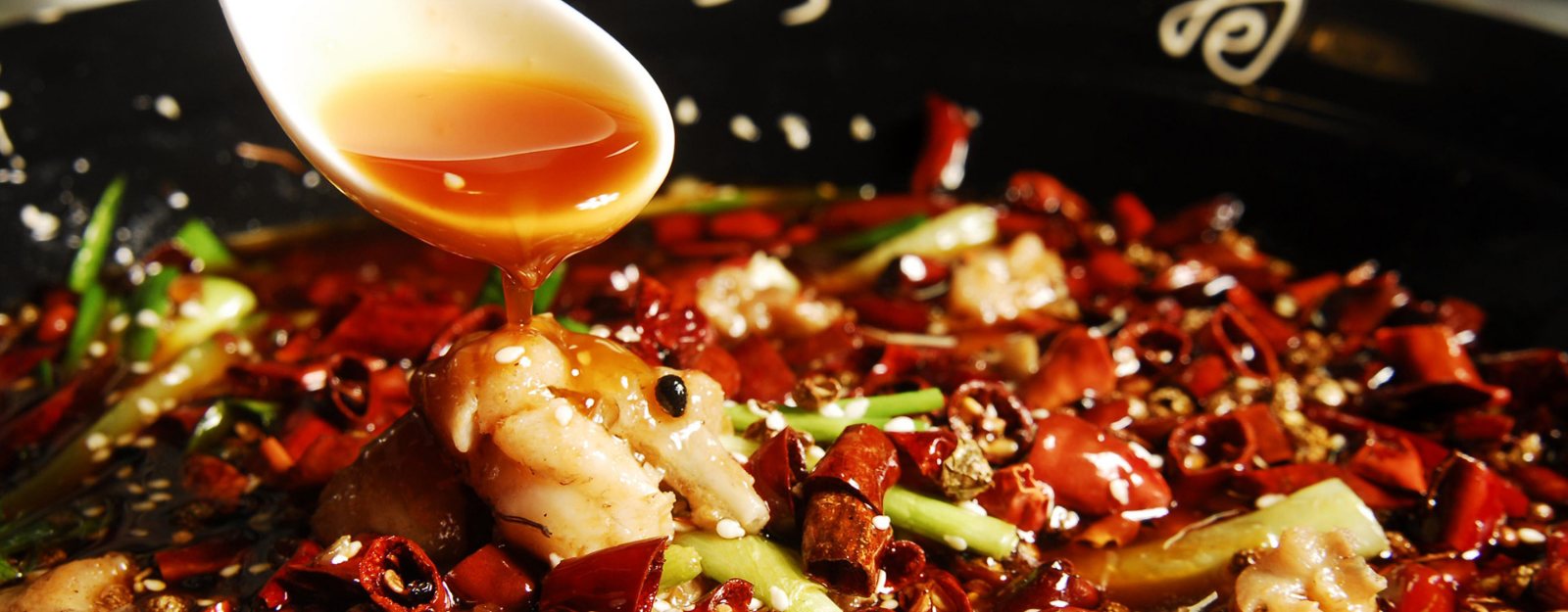
Màlà (麻辣) is two words: má, the numbing buzz, and là, the burning heat. The pairing is Sichuan’s signature, and it works because the two sensations travel different nerves — which means the kitchen can stack them, balance them, and play them against each other in a way no single-chilli cuisine can.
The two halves of málà
The fire half comes from chillies, which reached China from the Americas only in the late Ming era — a few centuries old in a cuisine measured in millennia. The numbing half is much older: Sichuan pepper (huājiāo) is native to the region, and it was seasoning food a thousand years before the first chilli crossed the border.
What the peppercorn actually does
The numbing agent is a molecule called hydroxy-alpha-sanshool. It does not burn anything: it makes your touch receptors fire rhythmically, at a frequency around fifty hertz — the same range as gentle vibration. That is the tingling “numbness”: not the absence of sensation, but a sensation pretending to be a pulse. Good kitchens toast the peppercorn whole; bad ones grind it to dust and you spend dinner fishing husks out of your teeth.
And the chilli
Chilli heat is real chemistry: capsaicin binds the receptor your body uses to detect actual burning, which is why the mouth behaves as though scalded. The Sichuan trick is layering — the chilli’s false pain runs on one set of nerves while the peppercorn’s buzz runs on another, and the two together read as a flavour rather than a dare. Green Sichuan pepper (téngjiāo) is the younger, citrusy sibling; try it in fish dishes.
Eating it without regret
Spice tolerance is trainable and temporary — and every Sichuan table has an off-ramp. Tell your guide your honest tolerance and the ordering changes: the “micro-spicy” register, the vinegar-dressed cold dishes, the sweet water noodles. Our Chengdu food walk and cooking day both scale the fire to the table, and the eight-cuisines map shows where to go when you want flavour without the voltage.
Where this leads
The Chengdu food quarter walk
The Sichuan cooking day
The eight cuisines