
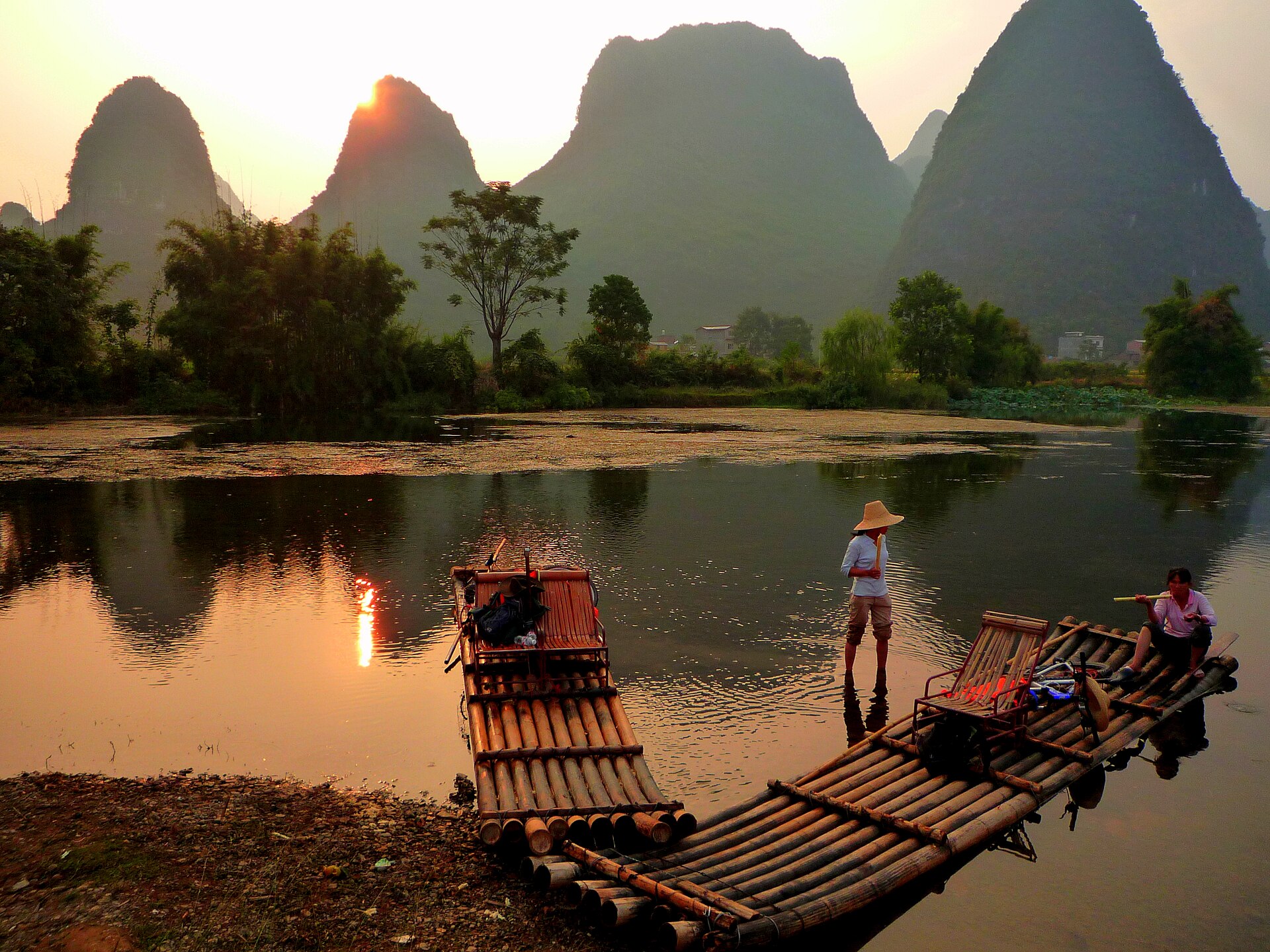
Guangxi sits in the subtropics, and the karst’s climbing calendar follows the heat rather than the rain. The strong season runs from October through April: cool mornings, dry air, friction that bites. The weak season is summer, when the humidity makes chalk a formality and the verticals run rivulets by ten in the morning.
The main season
October and November are the prize: the summer heat breaks, the paddies turn gold, and every sector is in condition. Winter is colder than visitors expect — Guangxi winters sit in the low teens by day — but cool, dry limestone in sunshine is one of climbing’s great pleasures, and the south-facing walls stay workable all day. Spring warms the air and loads the rain; the steep sectors, which shed water fast, come back into play before the slabs do.
What summer looks like
Summer climbing is early climbing: sessions that start at first light, end by eleven, and hand the afternoon to the river. The trade is real — a summer morning on shaded rock, a bamboo raft in the afternoon and the day market at dusk is a fine holiday — but it is a different trip from the October version, and families should know which one they are booking.
Rain and drying
The karst dries unevenly, and that is useful. Steep and overhanging rock — the tufa columns and roofs — sheds rain quickly and is climbable within hours of a storm. Vertical and slab sectors hold water in the pores and need a full day or more of sun and wind. A local guide earns their fee in a showery week simply by knowing which wall dried overnight.
What to bring
For the main season: a warm layer for mornings, sun protection for the midday walls, and shoes that work on friction. Chalk needs matter less in the cool months than visitors assume. Bring skin ambition and leave the rest to the guided plan — the guide carries the rack, the draws and the local meteorology.
Where this leads
The Yangshuo climbing week
The family climbing break
Reading the grades