
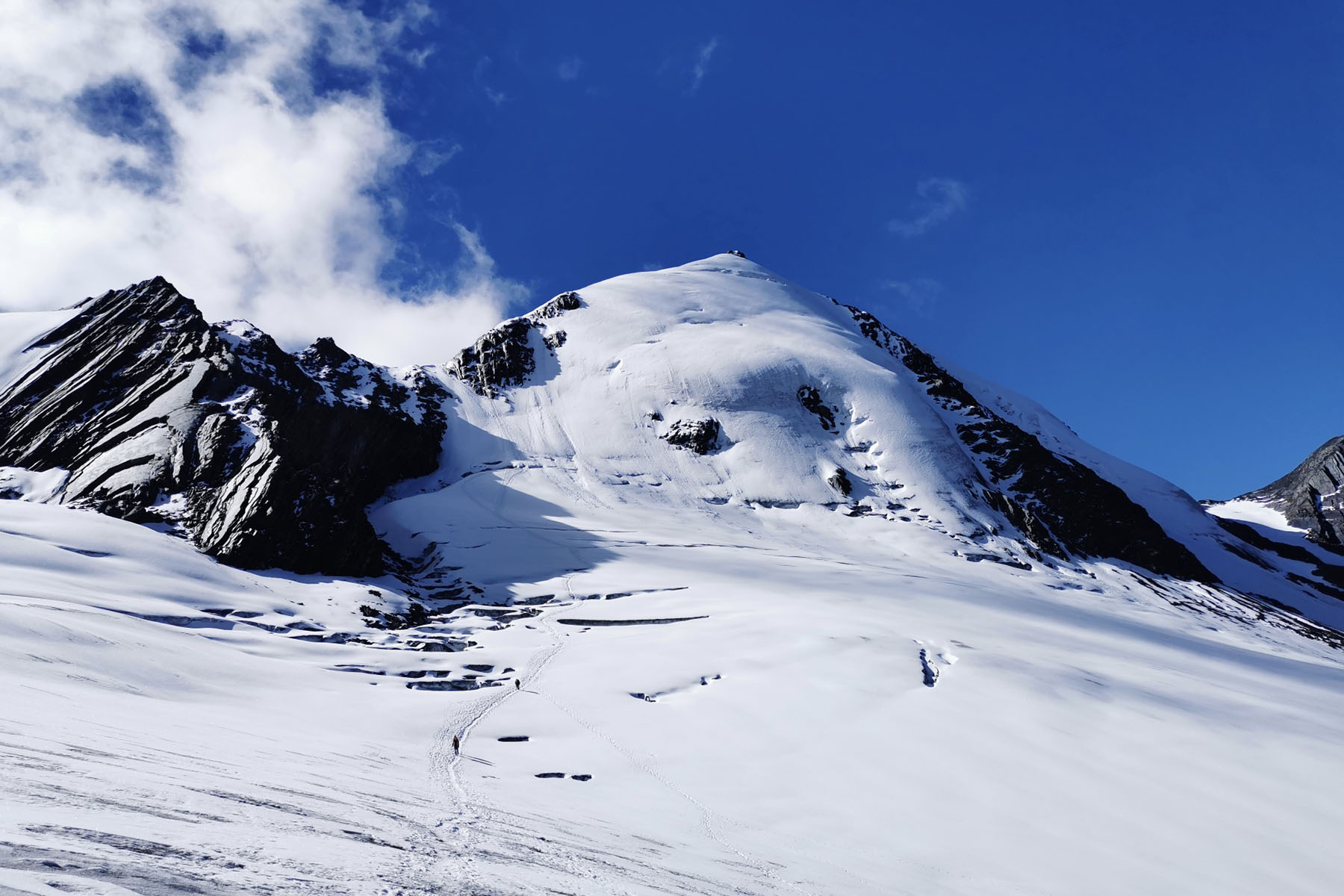
Most people who arrive at a first snow peak with us arrive from trekking — often from Dafeng or from one of our trekking routes. The pleasant surprise is how small the equipment delta is. Your layering system, your sleeping bag, your pack, your boots-and-gaiters habit: all of it carries over. What changes fits in a duffel you could also simply rent.
What carries over from trekking.
Everything you would pack for a high pass trek works on the approach days: the shell layers, the liner gloves, the sun kit, the water bottles you can fill boiling at camp. Camp life is the same camp life — tents are moved by horses or porters on every route except the carries above base camp, and the cook crew eats before you do, as always. If our trekking packing list fits your trekking, it fits your approach.
The four personal items.
Crampons, a harness, a helmet, and an ice axe — plus mountaineering boots stiff enough to take the crampons, which is the one genuine purchase, because soft trekking boots will not hold a front point. These are the personal kit the price list marks “can be arranged”: you do not need to own any of it for a first Erfeng or Yamu, and renting in China beats flying spikes and a shank-heavy boot across an ocean. Buy later, once the staircase has hooked you.
What the guide party owns.
Ropes, group shelter beyond the tents, and the technical hardware stay with the guide — that is what the “shared climbing gear” line in each expedition’s included list means, and it is why the private format matters. On ground steeper than walking, the rope between you and the guide is the whole system working as designed.
The ground under the crampons.
Know what you are signing up for, rung by rung. Erfeng’s summit slope is snow with one exposed stretch — front-pointing for minutes, not hours. Nama’s summit day is two movements: a scree march on broken rock first, then snow at 30–40 degrees. Wukuchu adds real glacier travel. And Reddomain’s final approach steepens to 60–70 degrees — ground where the rope, not your axe, is what holds you, and where the advanced rating comes from.
The cold, honestly.
The one habit change is about standing still. Trekking never asks you to be motionless at 5,000 metres in the dark; a summit day does — at the rope-up, at the belay change, at the turnaround debate. The fix is not a bigger jacket but more thin layers and warmer gloves than the trek version of you thinks necessary, plus the discipline to put them on before your hands go clumsy. The tents at Camp 1 on Jinyin sit at 4,900 metres; the sleeping system from the trekking list carries over unchanged.
Bring the layers, rent the metal, and let the staircase — mapped rung by rung here — decide when the front points come out.
Step onto snow?
The Erfeng expedition: first crampons, five days
The Nama expedition: scree, then snow
The trekking packing list it builds on
Your first 5,000-metre peak: Dafeng