
The belt.
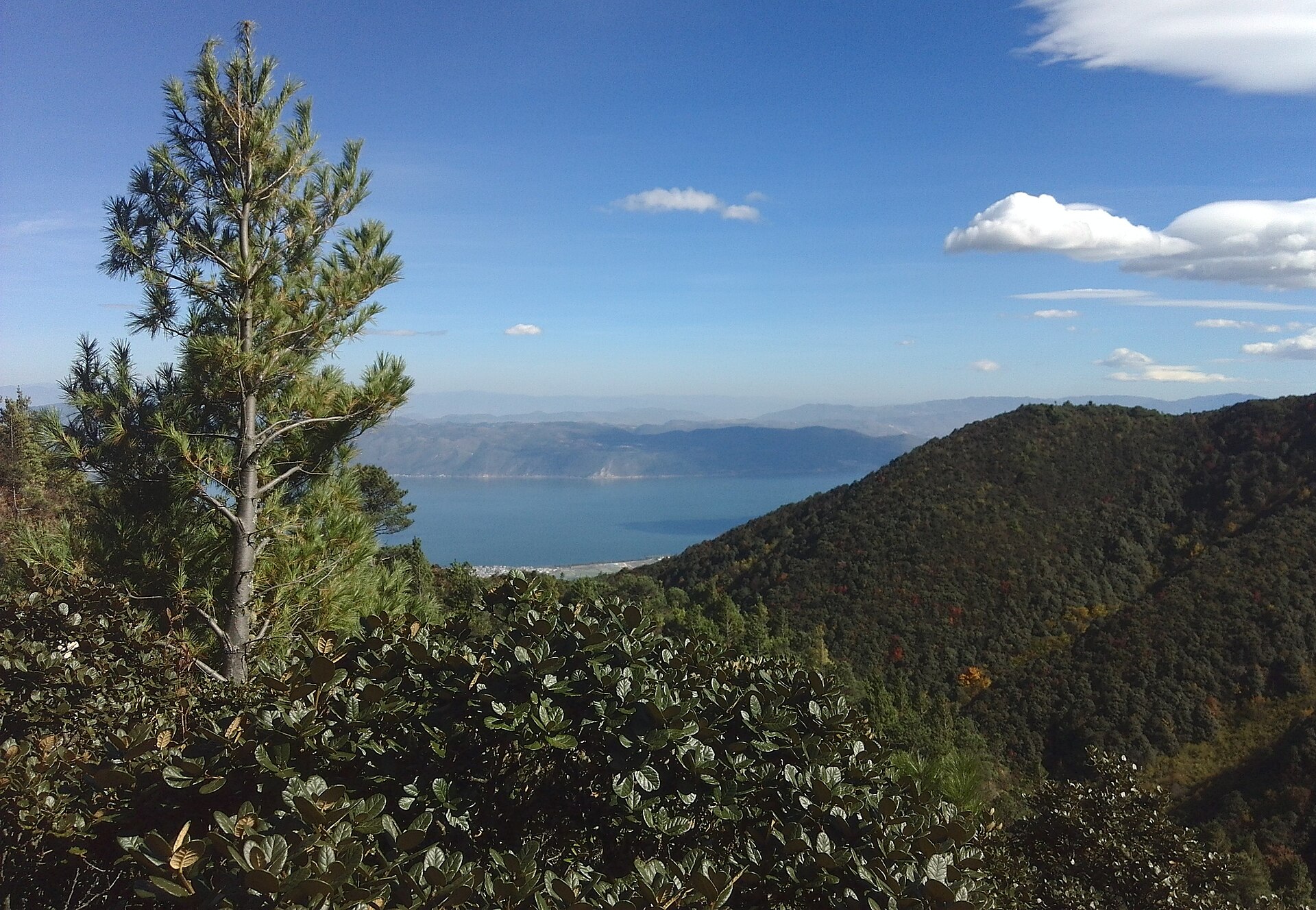
The Cangshan's defining feature is a cloud belt — a river of cloud that forms along the range's flank, pours over the saddles and dissolves, then reforms, for hours at a stretch. The effect gives Dali its famous light and the mountain its moods: the range will be invisible at breakfast and blazing by ten, with the belt running the whole time at 2,600 metres like a slow-motion waterfall turned upside down.
The trail.
The Jade Cloud path runs level along the range's shoulder at belt height — sixteen kilometres of stone path with the whole Erhai below and the cloud rolling past at eye level. Walk it in segments: the chairlift does the first climb, the waterfalls and the temples punctuate the middle, and the light changes every twenty minutes in a way that makes photographers forgive the crowds their own share of them.
The storms.
The range's name in the old books references its storms: the Cangshan builds cumulus by noon and drops its rain in theatrical, local, short-lived bursts. The walking craft is the mountain's own — start early, finish by the afternoon build-up, carry the shell you were going to carry anyway, and let the storms write the schedule. They are the best show on the mountain, and they are always headlining.
Keep reading
The tie-dye village
Erhai loop notes
Meili mountain light