
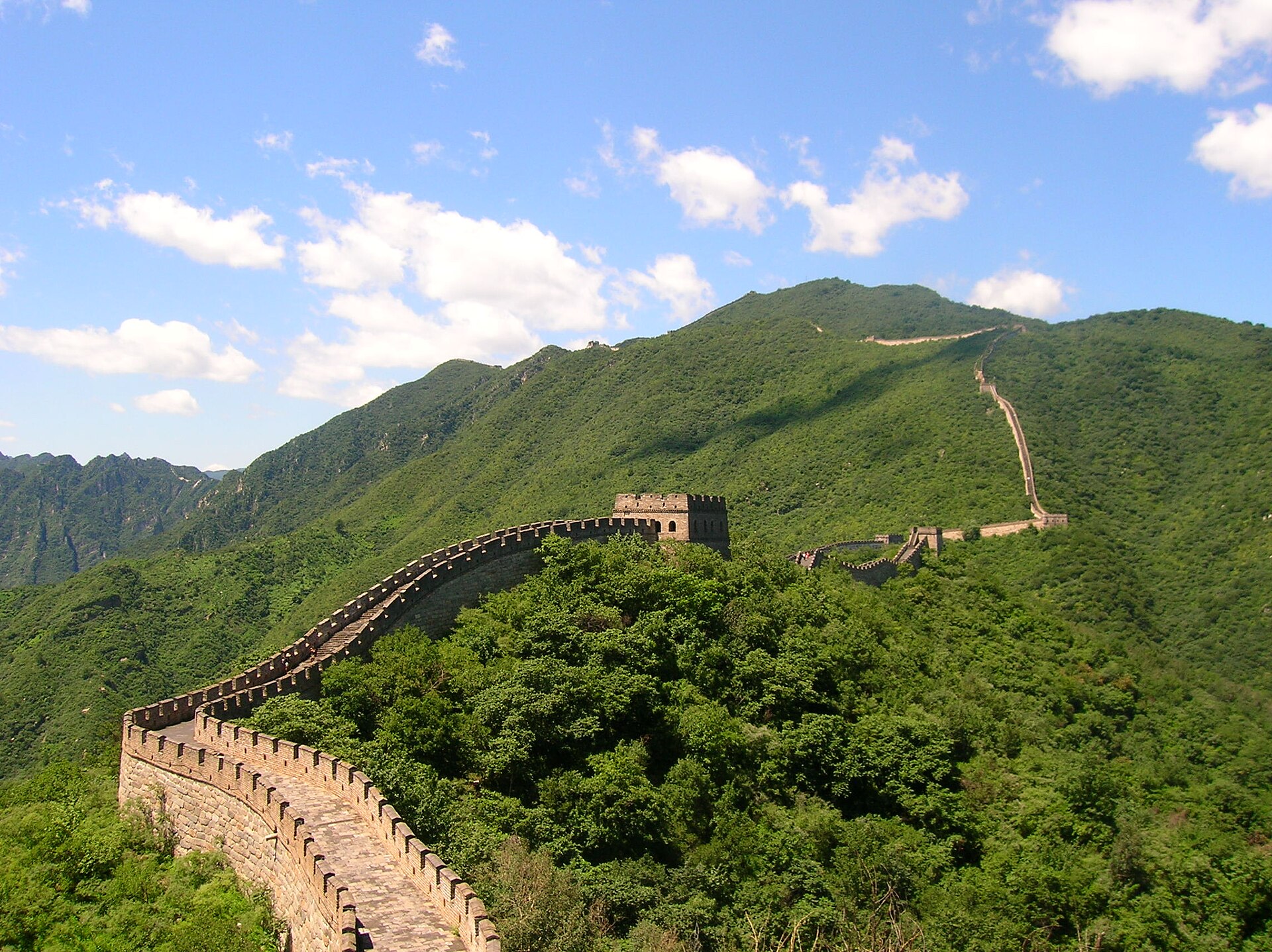
There is no single Great Wall experience, and the difference between the best and worst day out of Beijing is not the wall — it is the car park you choose. The same Ming masonry can be a conveyor belt of tour buses or a four-hour ridge walk where you pass four people, and the two are three hours apart.
This is a decision piece, not an inspiration piece. Below are the six sections that people actually visit from Beijing, what each costs, how long it takes to get there, and which one we would send a walker to.
The sections, compared.
| Section | From Beijing | Entry | Effort | Company | Best for |
|---|---|---|---|---|---|
| Badaling | 30 min by rail | ¥40, ¥35 in winter | Low | Thousands | A half day, or limited mobility |
| Mutianyu | 1.5–2 hours | ¥45, cable car ¥120–140 return | Low to moderate | Hundreds | A first visit that still feels like a walk |
| Jinshanling | 2.5 hours | ¥65, ¥55 in winter | Moderate to hard | Dozens | The five-hour ridge walk |
| Jiankou | 3 hours | No ticket office | Hard, exposed | Almost none | Experienced walkers, with a guide |
| Gubeikou | 2.5 hours | Free | Moderate | Very few | Wild wall without the exposure |
| Simatai | 2.5 hours | ¥40, night session separate | Moderate | Limited by booking | The lit wall after dark |
Badaling: the one everyone means.
Badaling is the closest section to Beijing, the most heavily restored, and the one on the postcard. It is also where the majority of visitors go — published estimates put it at around two thirds of all Great Wall visitors, and on a peak summer Saturday the gate can process somewhere between sixty and eighty thousand people.
None of that makes it bad. The wall here is genuinely fine, the approach is genuinely easy, and for someone with limited mobility or a four-hour layover it is the only realistic option. It has a cable car, a pulley ride down, and a coffee shop. What it does not have is quiet, and at 11am in July you are not walking the wall so much as queueing along it.
Access is the reason it fills: high-speed trains run from Beijing North and Qinghe to Badalingchangcheng in 25–30 minutes for ¥18–31, and buses from Deshengmen take about 75 minutes for ¥12. If you go, go at opening. The crowd arrives between ten and two and leaves in the same window.
Mutianyu: the default for a reason.
Ninety minutes to two hours north-east of the city, Mutianyu has twenty-two watchtowers across roughly 2.25 kilometres of restored wall, and the ridge it follows is more dramatic than Badaling's. It also has about a third of the visitors.
Entry is ¥45. The cable car is ¥120–140 return and the toboggan down is around ¥100 — both optional, both genuinely useful, because the walk up from the car park is a long staircase in the heat. The toboggan is either the best or the worst part of the day depending on your tolerance for being 60 seconds from a brake failure.
There is no train to Mutianyu. Public transport means bus 916 to Huairou and then a local bus or taxi, which works but eats the day. A private car is roughly ¥600–800 return, and for two or more people it is usually the better trade.
Jinshanling: the walk.
This is where the Wall becomes a hike rather than a visit. Jinshanling is 130 kilometres from Beijing, about two and a half hours by road, and the section is only partly restored: original stone, crumbling parapets, towers at intervals along a ridge that climbs and falls for hours.
The classic route is Jinshanling to Simatai, five to six hours one way, with a cable car at the Jinshanling end (about ¥80 one way) to skip the first climb. Entry is ¥65 in the main season, ¥55 in winter. On a weekday in October you may see fifty people all day. On the same day, Badaling sees tens of thousands.
It is also the section with the least shade and the most exposure — no vendors, no cable car in the middle, and long stretches with a drop on both sides. Carry two litres of water and start early enough that you are off the ridge before the light goes.
Jiankou, honestly.
Jiankou is the most photographed wild wall in China: the "Arrow Nock" bend where the wall folds into a W across a knife-edge ridge. It is unrestored Ming work, in places near-vertical, with the section known as the Sky Ladder requiring hands as well as feet.
It has no ticket office, no facilities, and no management in the ordinary sense. Parts of it are closed periodically for conservation or because someone has fallen, and those closures are not always announced anywhere you will find them. This is not a place to arrive at with a taxi and a phone map.
Gubeikou, twenty minutes further, is the compromise: undeveloped, free to enter, with the same wild feel and considerably less exposure. Informal local guides ask ¥100–200 for trail access and route advice, which is worth paying.
Tickets and timing.
Every major section now runs real-name entry against your passport, and several have moved to timed online booking. On-site windows still exist at Badaling and Mutianyu for standard daytime admission, but do not build a long-planned trip around buying at the gate in peak season — book a day ahead, and three days ahead around any public holiday.
Two timing rules matter more than the ticket. First, crowds at every section arrive between ten and two; being at the gate at opening gives you better light, cooler air and a fraction of the people. Second, public transport back to Beijing often stops running in the mid-afternoon, so a late finish at Jinshanling or Gubeikou means a private car or a very expensive taxi.
Weather closes things quietly. Cable cars stop in fog and electrical storms, the toboggan stops in rain or wind, and the wall itself can close when snow on the steps makes it unsafe. In winter, check before you set out rather than after two hours in a car.
For what to carry, how to pace a mixed group and when to turn around, our Wall walking day guide covers the day itself.
And avoid the holiday weeks entirely. During Golden Week and the Spring Festival the same ridge that holds fifty people in October holds thousands, and the train to Badaling sells out days ahead. Our holiday calendar sets out the dates worth planning around.
If we were booking one day for someone who wanted to walk rather than queue: Mutianyu on a weekday, first cable car up, four hours on the wall, toboggan down. If they had a full day and good legs: Jinshanling to Simatai, with a car waiting at the far end.
Prices and access checked 3 November 2026 against published section tariffs and current booking practice. Section closures, cable-car maintenance and booking rules change without much notice; confirm with the operator or your guide before committing to a fixed date.
Walking the Wall properly?
See the Great Wall walking routes →